Case Study
NotionRides
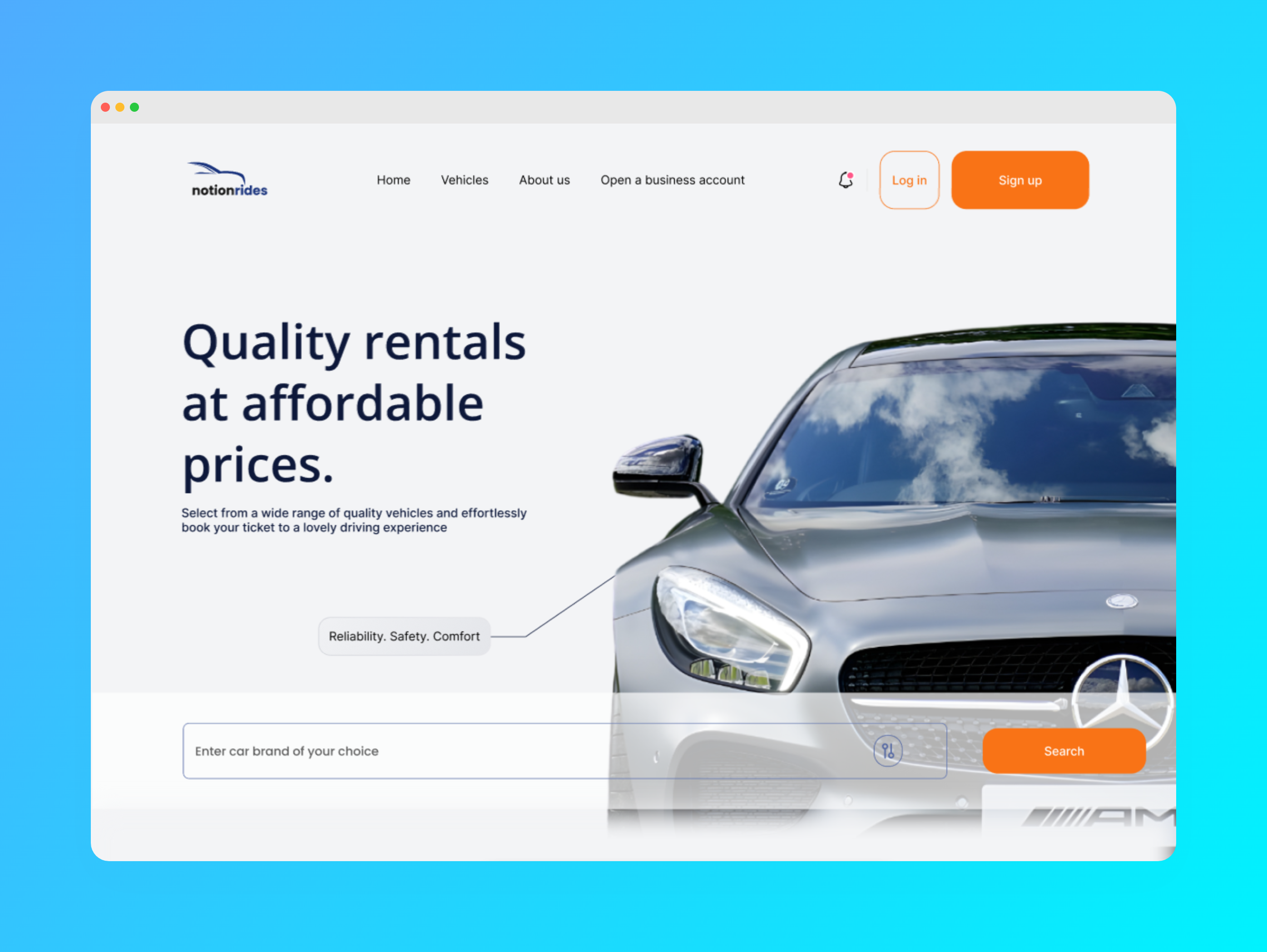
A car rental management platform that replaces phone calls and social media with a real booking and payment system.
The Problem
Small car rental businesses in emerging markets run on manual processes: calls, social media DMs, cash payments, and spreadsheets. This leads to double-bookings, missed reservations, and no visibility into revenue or fleet utilisation. NotionRides centralised inventory, reservations, and payments into one system for a single owner serving multiple customers.
Key Technical Decisions
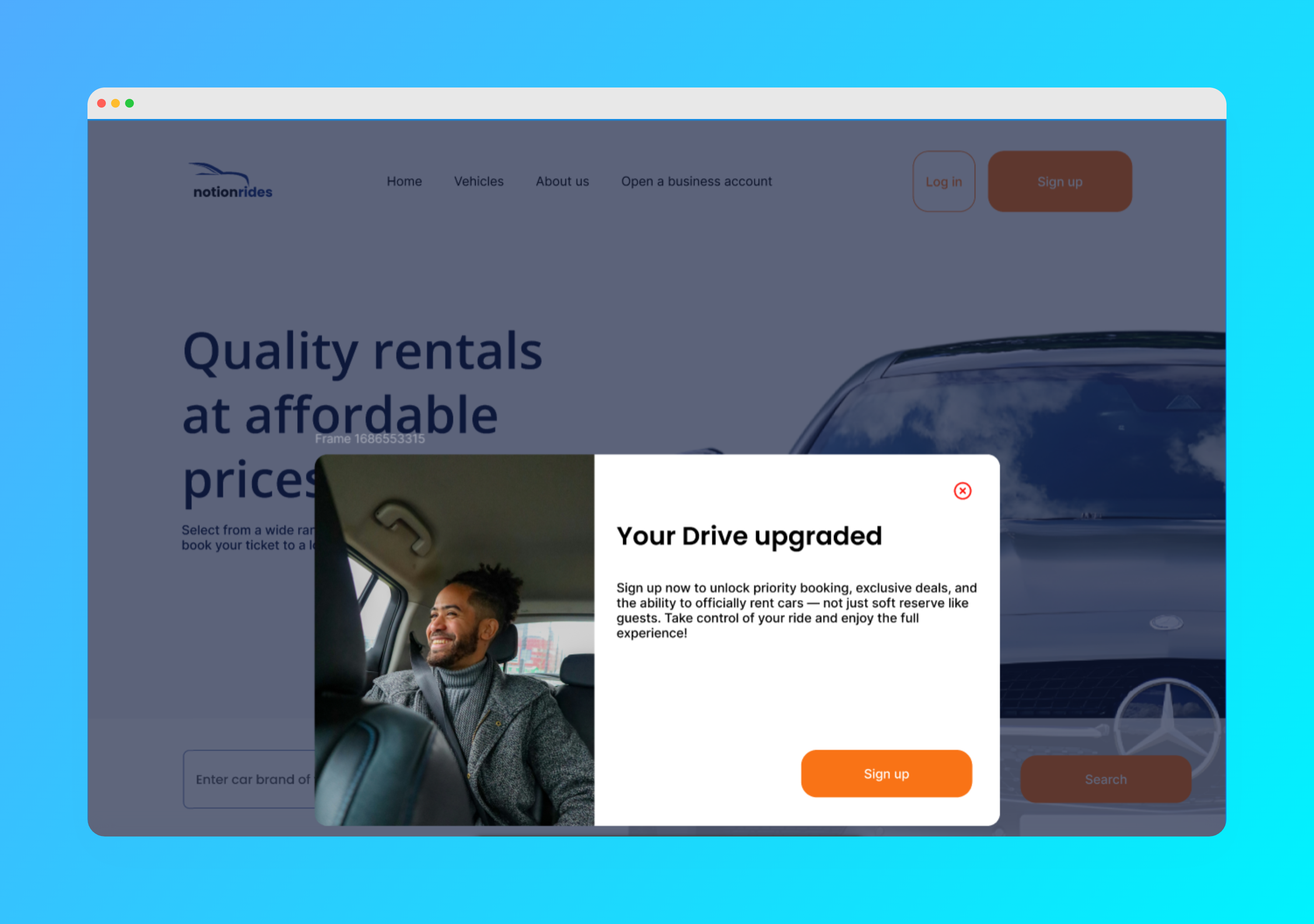
Modelled two distinct reservation states (soft-reserve for guests, firm-reserve for account holders) rather than a single booking flow. Guest soft-reserves expire after 24 hours and are automatically overridden by account holder bookings, which required a clear state machine rather than a simple boolean flag.
Used Firebase Auth for session management rather than a custom auth layer; the team was working to a tight deadline and Firebase's social login and email verification covered the requirements without additional backend work.
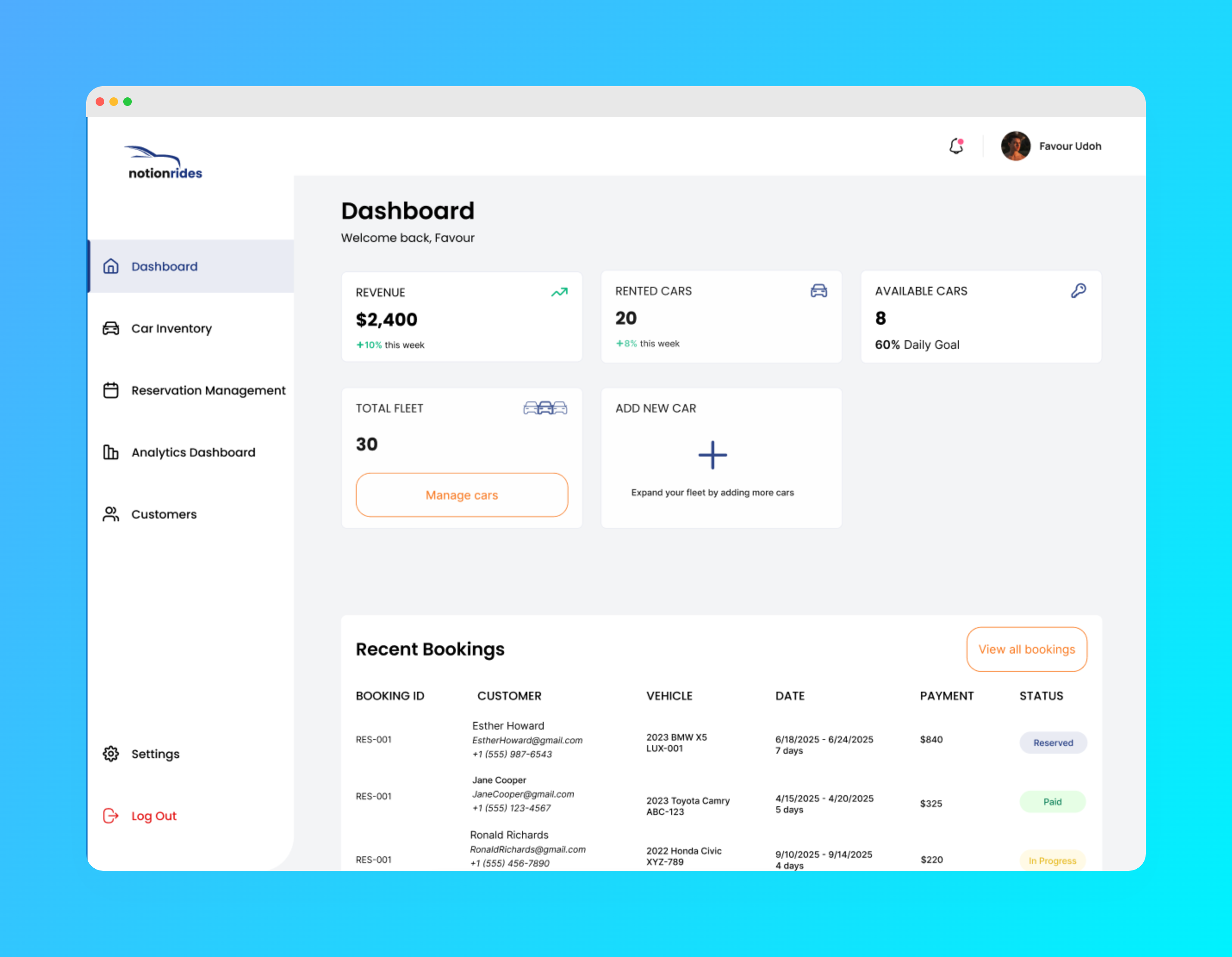
Built the reservations view with both a table list and a calendar view, because the business owner needed to see both a detailed per-booking record and a visual occupancy overview.
Challenges & Solutions
Challenge
Guest users needed a meaningful reservation experience without an account, but their reservations had to be clearly lower-priority than account holder bookings for the same car on the same dates.
Solution
Implemented a soft-reserve system with a 24-hour hold, clearly communicated in the confirmation email, and built the conflict resolution so an account holder booking automatically cancels the guest hold and triggers a cancellation notification.
Challenge
The business owner needed analytics that were actionable, not just decorative: metrics like utilisation rate (cars booked divided by cars available) and most-rented cars required aggregating across reservations, not just counting rows.
Solution
Computed utilisation rate and rental frequency client-side from the reservations dataset, grouping by car ID and date range, and displayed them in a clean summary dashboard alongside total revenue and active booking counts.
Outcome
Delivered a working full-stack car rental platform with guest and account-based reservation flows, Stripe payment processing, conflict resolution, and a business owner analytics dashboard.
What I Learned
Reservation systems look simple until you add time, state, and multiple user types. The soft-reserve versus firm-reserve distinction forced me to think about state machines rather than CRUD; a booking is not just a row, it has a lifecycle with real consequences for real users.